SLE 1128 PROJECT OFFICIALLY LAUNCHED IN MOYAMBA DISTRICT
Communication Silnorf
June 5, 2026
By: Communication Department SiLNoRF (StoryLab Creative_Pro) Idrissa Jerry Kargbo
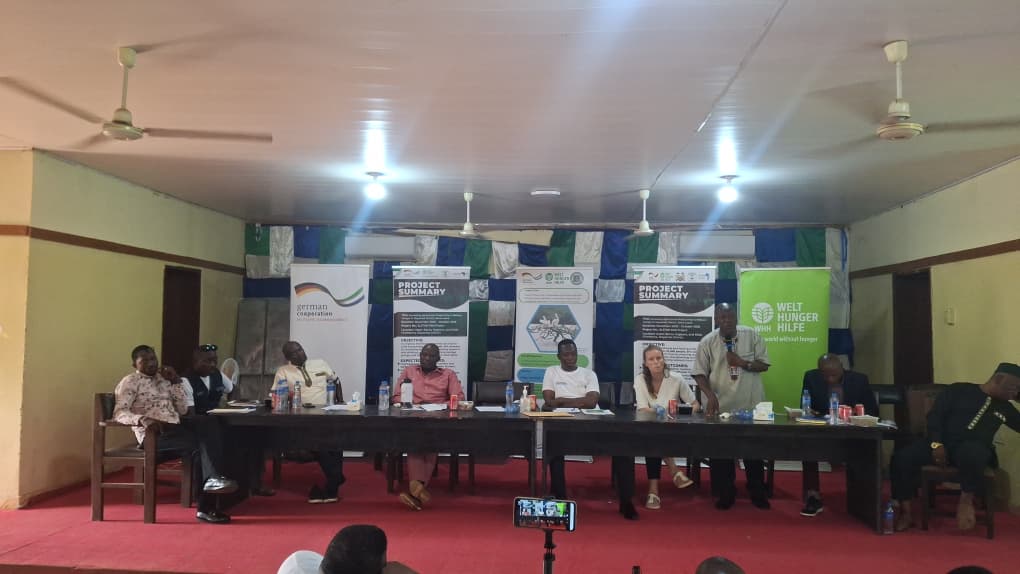
The Sierra Leone Network on the Right to Food (SiLNoRF), in partnership with WellFound Sierra Leone and with funding support from the Federal Ministry for Economic Cooperation and Development (BMZ) through Welthungerhilfe (WHH), has officially launched the SLE 1128 Project in Moyamba District. Held at the Moyamba District Council Hall, the launch brought together government officials, development partners, technical experts, and community stakeholders in a unified commitment to addressing food insecurity, strengthening rural livelihoods, and advancing sustainable development outcomes across 30 communities in the district. This milestone marks the commencement of a multi-year intervention designed to transform agricultural productivity, improve household nutrition, and strengthen climate resilience through an integrated, rights-based approach.
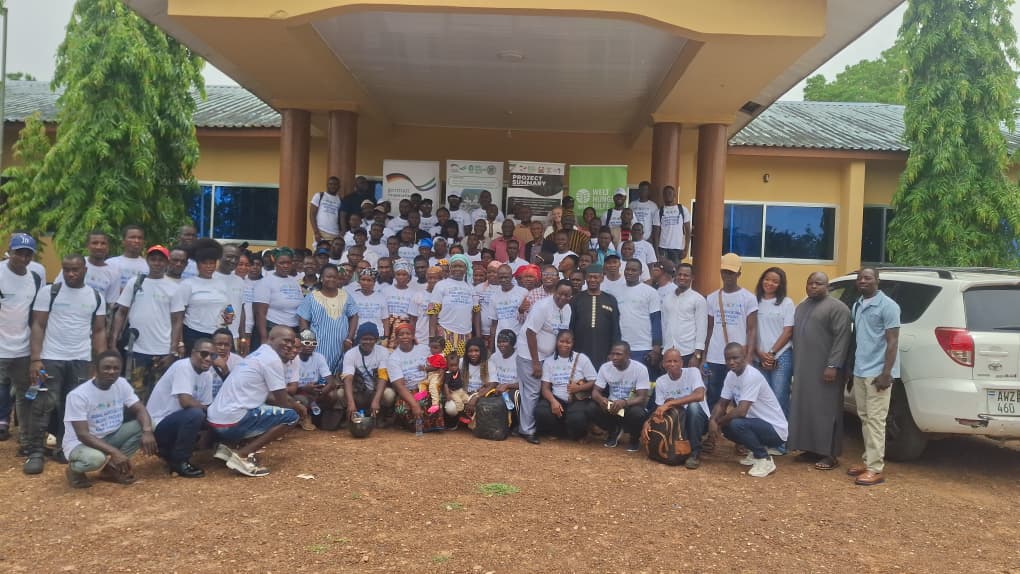
The launch event was graced by key national and international stakeholders, reflecting the strong collaboration underpinning the project’s implementation. Distinguished attendees included:
Their participation reaffirmed a shared understanding that sustainable food systems require coordinated action across agriculture, environment, governance, and community development sectors.
Project Title:
Increasing Agricultural Productivity to Reduce Hunger among the Rural Poor Population in Moyamba District, Sierra Leone
Implementation Period:
November 2025 – October 2028
Coverage Area:
30 rural communities in Moyamba District
Funding:
€1.8 million, provided by BMZ through WHH
Implementing Partners:
Despite its strong agricultural potential, Moyamba District remains one of the most food-insecure regions in Sierra Leone. The majority of rural households depend on agriculture for their livelihoods, yet productivity remains low due to persistent structural and environmental challenges.
Key constraints include:
These challenges are further compounded by seasonal food shortages, with many households experiencing acute food insecurity during the lean period between April and August. The SLE 1128 Project responds to these realities through an integrated development model that combines agricultural transformation, financial inclusion, WASH interventions, gender equity, and institutional strengthening.
Speaking at the ceremony, Ms. Zuzana Brehova, Head of Programmes at Welthungerhilfe (WHH), described the SLE 1128 Project as a strategic intervention aimed at building resilient and self-reliant rural communities. She emphasized that the project goes beyond agricultural support, integrating multiple development dimensions to ensure long-term impact:
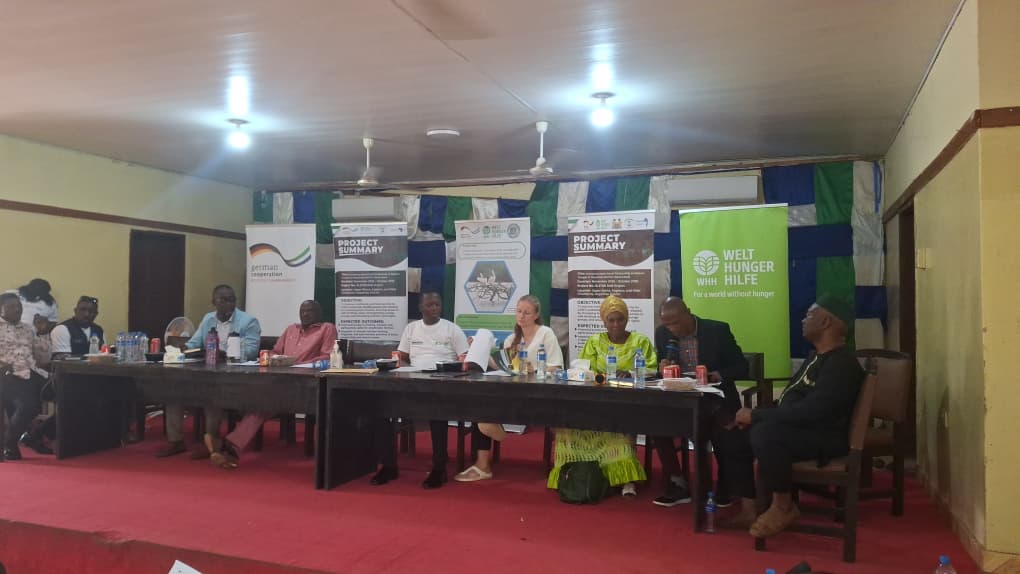
“This initiative is not only about increasing production, but about strengthening systems that allow communities to thrive sustainably economically, socially, and environmentally.”
She further noted that the project reflects a strong commitment by BMZ, WHH, SiLNoRF, and WellFound Sierra Leone to addressing the root causes of food insecurity in Moyamba District.
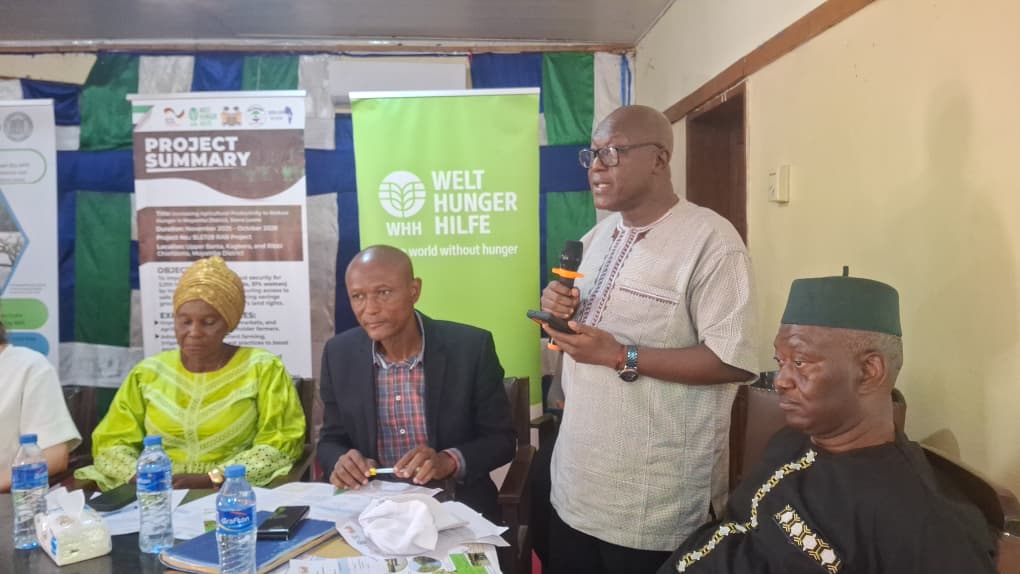
On behalf of SiLNoRF, Mr. Abass J. Kamara, Deputy National Coordinator, reaffirmed the organization’s commitment to ensuring that the project remains community-driven and rights-based, with a strong emphasis on accountability, inclusion, and sustainability. He further provided a clear and practical breakdown of how the SLE 1128 Project will directly benefit farming households across Moyamba District. Speaking in a way that connected policy to everyday rural realities, he explained how the intervention will strengthen farmers’ productivity through improved access to climate-smart agricultural tools, better farming practices, organized farmer groups, and enhanced post-harvest handling systems. He emphasized that these interventions are designed to help farmers move from subsistence struggles to more productive, resilient, and income-generating agricultural activities.
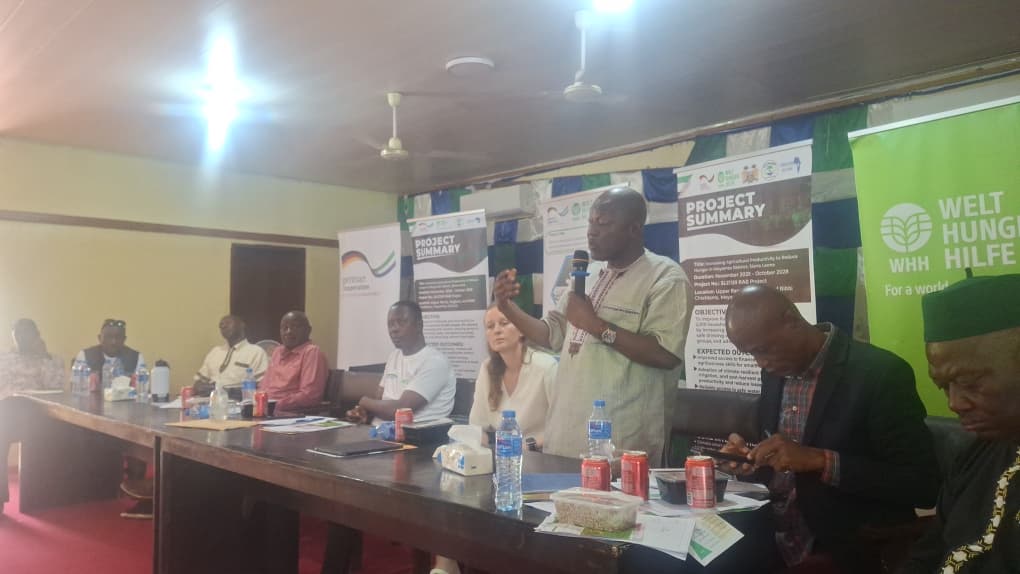
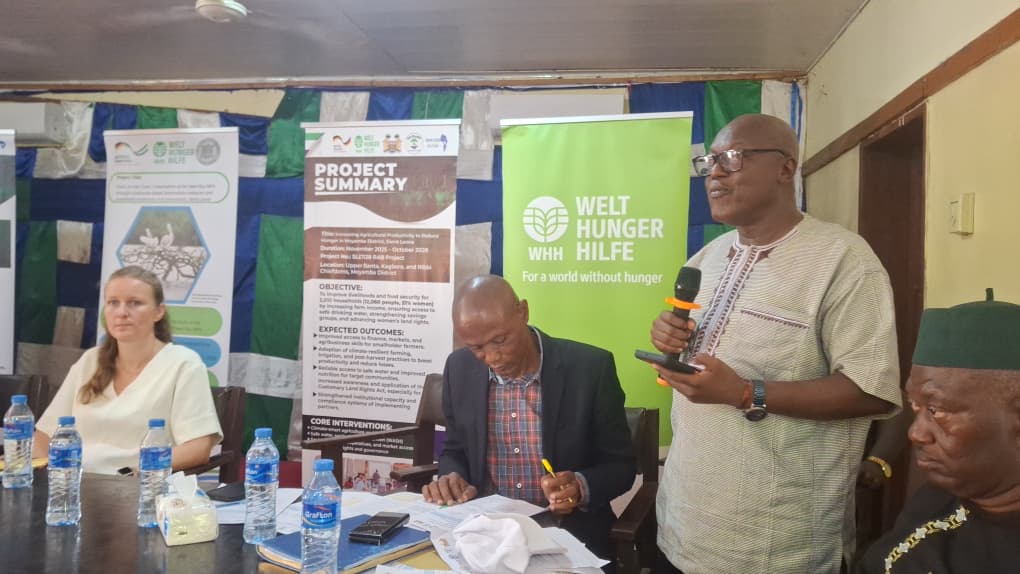
“Una go see say dis project no be just talk, e be work wey go touch una life direct. Imagine one farmer for one village wey dey waka go farm every day, but e dey suffer for water sickness or e no get proper tools. With dis project, e go get clean water near am, e go learn better farming methods, e go join group wey go help am save and borrow small money, and e go fit harvest more than wetin e bin dey get before.”
Through this practical storytelling approach, Mr. Kamara underscored that SLE 1128 is not only a development project on paper, but a lived transformation that will be felt in farms, households, and communities across Moyamba District.
The Country and Programme Director for WellFound Sierra Leone, Andrew Mustapha, highlighted the WASH component of the project, noting that improved access to safe water, hygiene promotion, and nutrition awareness will directly reduce waterborne diseases, improve household health, and ultimately increase farmers’ ability to work consistently on their farms without frequent illness or productivity loss. In a relatable and storytelling approach, he translated the project’s impact into everyday scenarios in Krio, helping community members visualize the change in their daily lives:
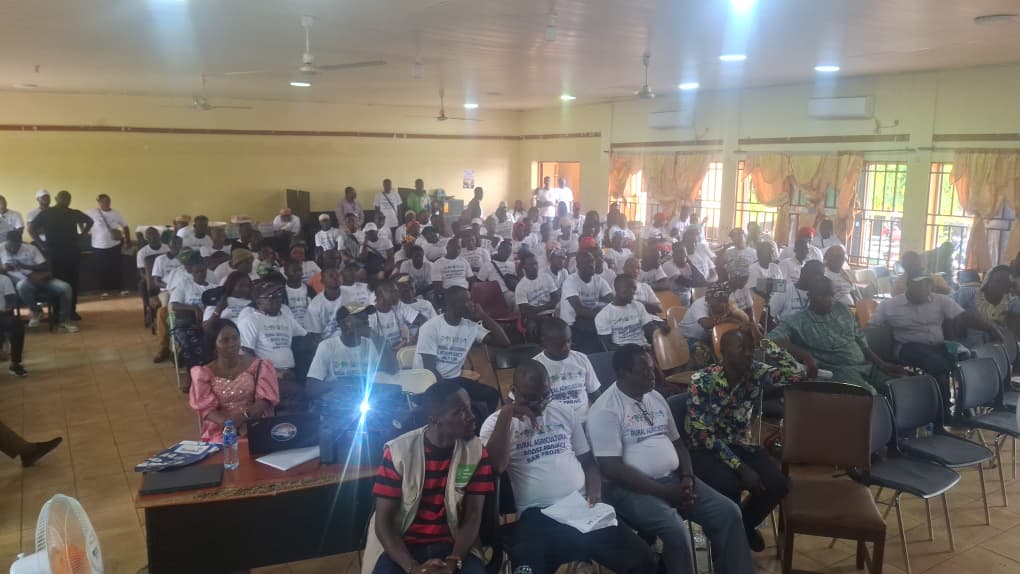
“Na so too for WASH side. Pikin dem go stop for fall sick all di time from dirty water. Mama dem go fit cook better food, and whole family go get better health. When health improve, work go improve too, and when work improve, life sef go improve.” he added.
During his PowerPoint presentation at the launch, the Head of Programmes at SiLNoRF Mr Lansana H. Sowa provided a clear and structured breakdown of the SLE 1128 Project, designed to help both stakeholders and community members fully understand how the intervention will translate into real, practical benefits on the ground. He explained that the project is built around five interconnected pillars that collectively respond to both immediate needs and long-term structural challenges affecting rural livelihoods in Moyamba District.
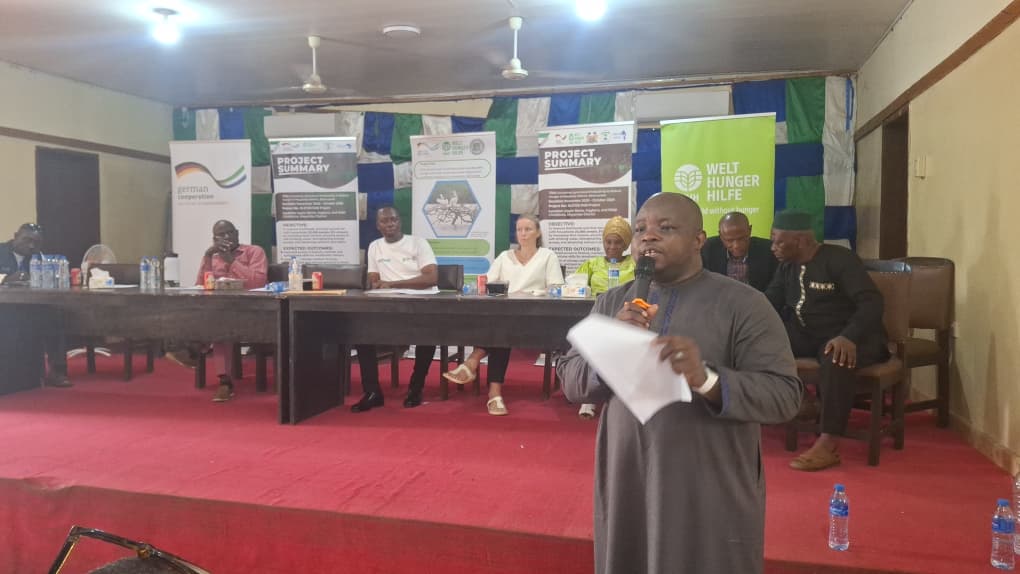
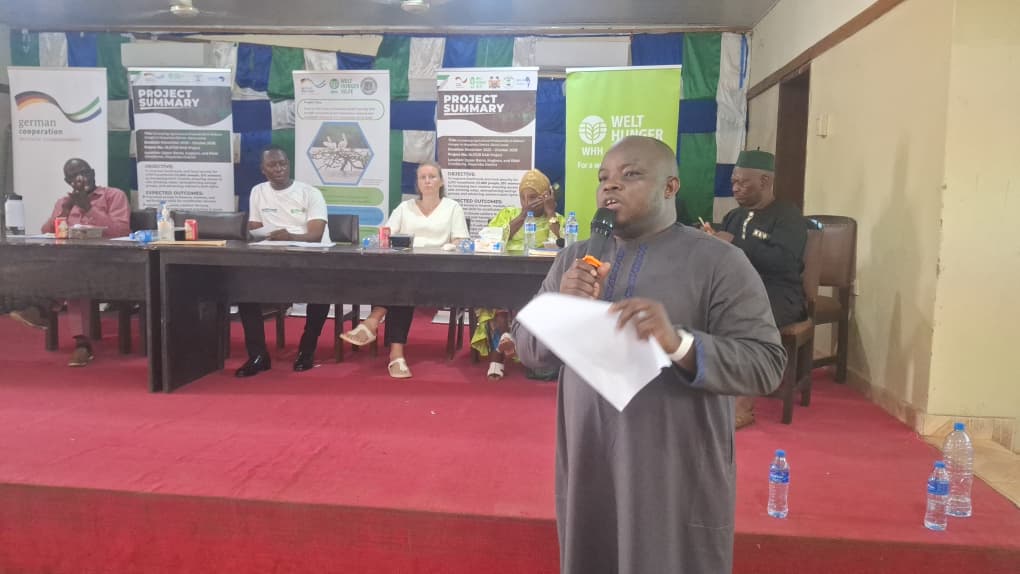
He outlined that the Livelihoods and Financial Empowerment component will strengthen rural economic resilience through the establishment and support of Village Savings and Loan Associations (VSLAs), Farmer-Based Organizations (FBOs), and agricultural cooperatives. These community structures, he emphasized, will serve as engines of financial inclusion by improving access to savings, credit facilities, market linkages, and entrepreneurship opportunities for farming households. He further noted that the Climate-Smart Agriculture and Value Chain Development component will equip farmers with improved inputs, irrigation systems, and modern, climate-resilient farming practices aimed at increasing productivity while reducing crop losses and environmental degradation.
He further explained that the WASH (Water, Sanitation and Nutrition) component will directly improve access to safe drinking water, promote hygiene practices, and strengthen community nutrition awareness through structured, community-led systems. On Gender Equality and Land Rights, he highlighted the project’s commitment to ensuring fair access to land and productive resources, particularly for women and youth, through sensitization on the Customary Land Rights Act (2022) and sustained community advocacy. Finally, he stressed that the Institutional Capacity Strengthening pillar will enhance the effectiveness of implementing partners by improving financial management systems, monitoring and evaluation frameworks, compliance mechanisms, and data-driven accountability processes to ensure transparency and efficiency throughout implementation.
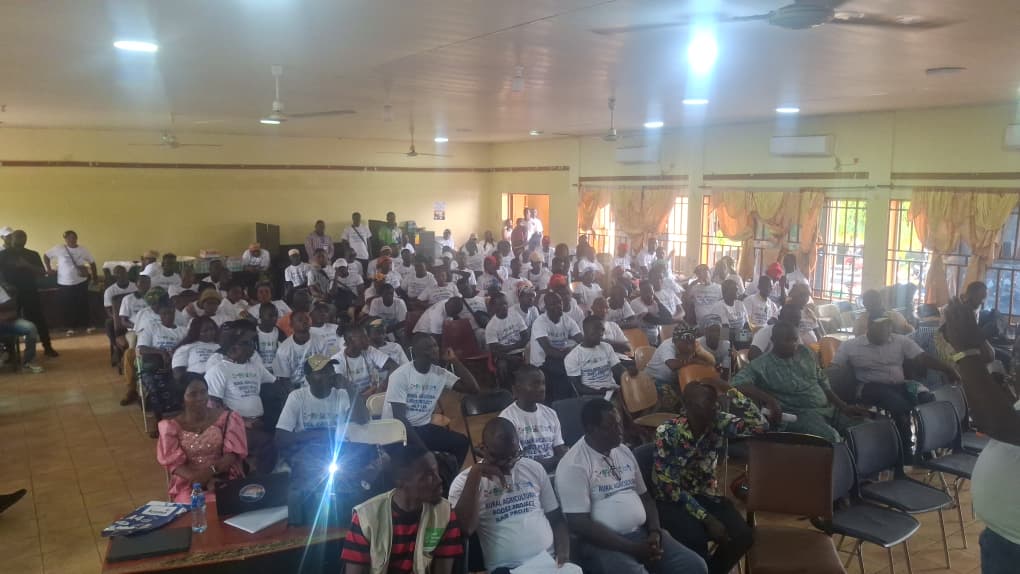
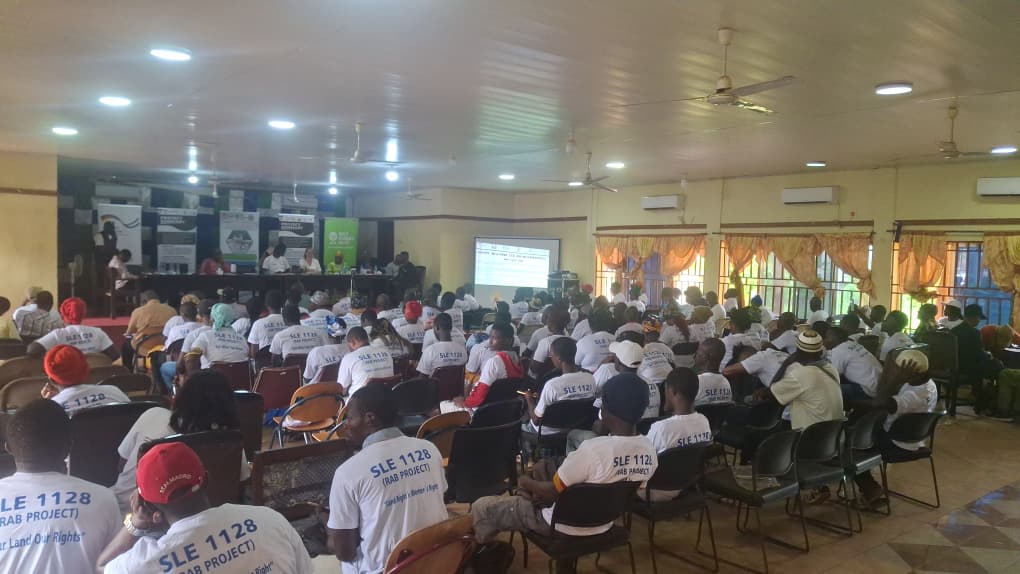
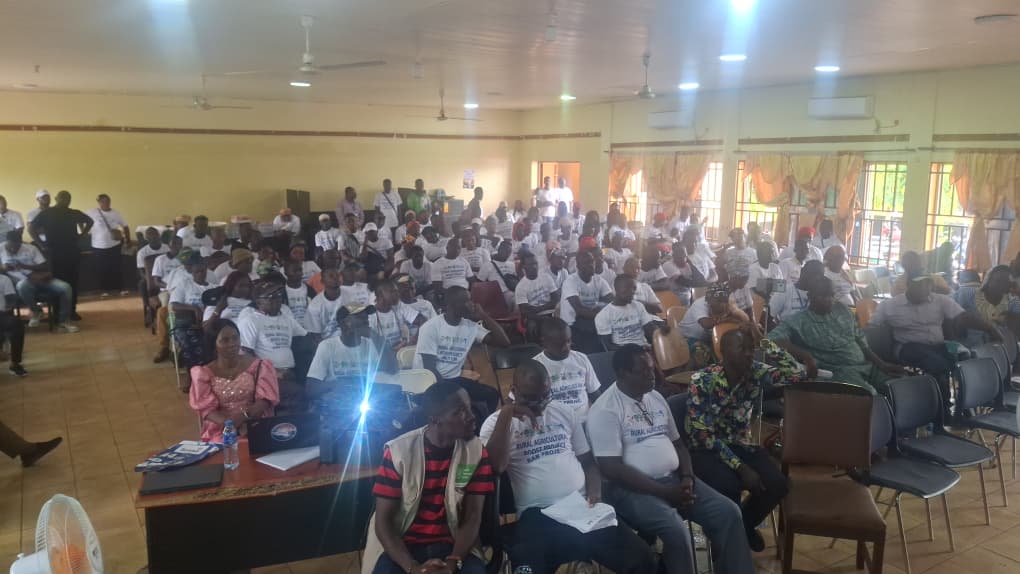
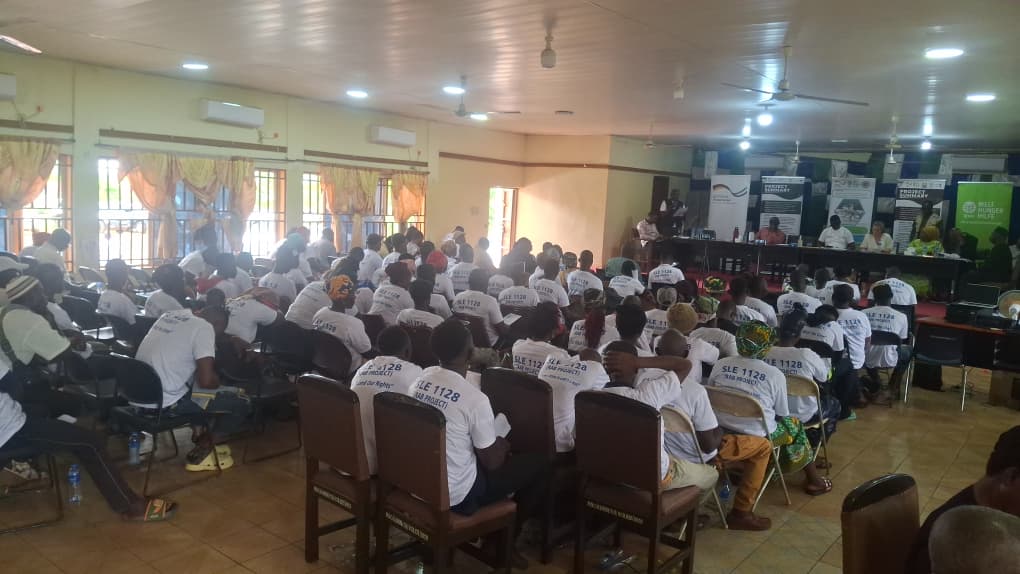
He concluded by presenting the expected outcomes of the project, noting that SLE 1128 will contribute to improved food and nutrition security across 30 communities, increased agricultural productivity and climate resilience, enhanced household incomes and financial inclusion, reduced waterborne diseases and malnutrition, and stronger participation of women and youth in land governance. He emphasized that beyond outputs and targets, the project represents a shared vision for sustainable rural transformation—one that strengthens systems, empowers communities, and restores dignity through improved livelihoods and food security across Moyamba District.
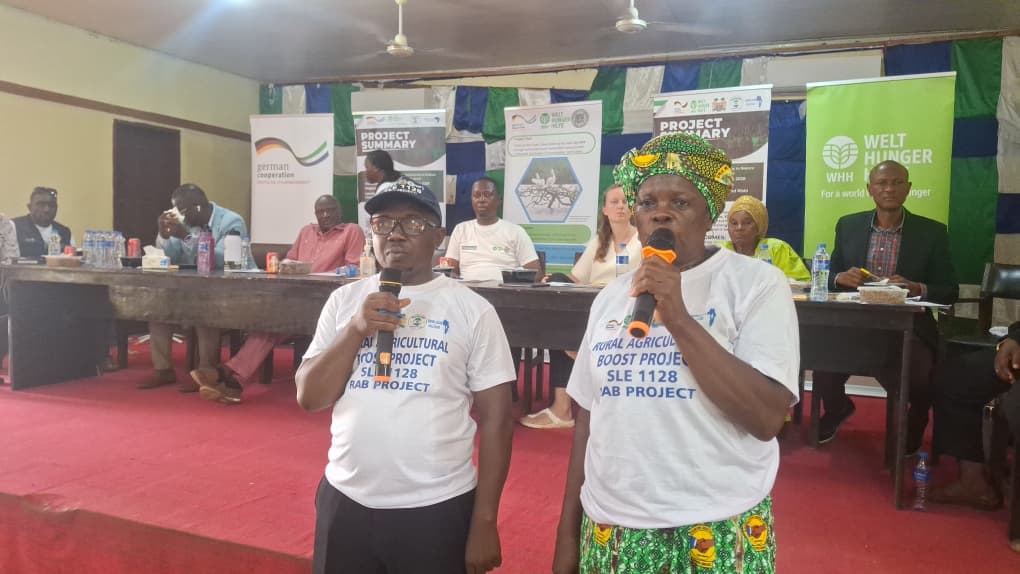
At the end of the programme, community members were given the opportunity to actively participate through an open question-and-answer session designed to provide further clarity on key implementation details of the SLE 1128 Project. Participants raised practical concerns and sought timely information regarding the procurement and distribution of improved seeds and farming equipment, as well as the expected timelines for the construction of new wells and the rehabilitation of existing water points. The engagement created a meaningful space for dialogue, allowing community voices to be heard directly by implementing partners and reinforcing the project’s commitment to transparency, accountability, and community ownership in every stage of implementation.
Copyright © SilNorf 2025 – All rights reserved
Developed By: Link Corporation Limited SL